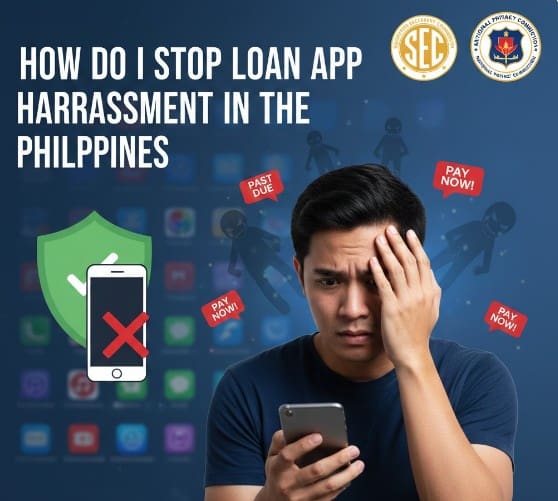
How do I stop loan app harassment in the Philippines is a question thousands of Filipinos ask daily as they face aggressive debt collection tactics. From “debt shaming” on social media to receiving threatening text messages and unauthorized contact access, the psychological toll can be overwhelming. Fortunately, the Philippine government has established strict regulations to protect borrowers from predatory Online Lending Apps (OLAs). By understanding your rights under the Data Privacy Act and knowing how to engage with the Securities and Exchange Commission (SEC), you can effectively end the harassment and regain your peace of mind.
Understanding Your Rights: Is the Harassment Illegal?
Before taking action, it is vital to recognize that while you have an obligation to pay a legitimate debt, lenders do NOT have the right to harass, threaten, or shame you. In the Philippines, the National Privacy Commission (NPC) and the Securities and Exchange Commission (SEC) have issued circulars specifically banning unfair debt collection practices.
Common illegal tactics include:
-
Using profane or insulting language.
-
Disclosing the borrower’s name as a “scammer” on social media.
-
Contacting people in the borrower’s phone directory without consent.
-
Threatening physical harm or using false legal threats (e.g., claiming you will go to jail for debt, which is unconstitutional in the Philippines).
To ensure you are dealing with a legitimate entity, you should always check if you are using a sec registered loan app, as these licensed companies are strictly monitored for compliance with fair collection standards.
5 Immediate Steps to Stop Loan App Harassment
If you are currently being targeted, follow these steps immediately to mitigate the damage and stop the communication.
Step 1: Document All Harassing Messages and Calls
Do not delete anything. Take screenshots of:
-
Threatening text messages (SMS) and the sender’s number.
-
Social media posts or comments where you are being shamed.
-
Call logs showing the frequency of harassment.
-
Emails containing abusive language.
These will serve as primary evidence when you file a formal complaint.
Step 2: Update Your Social Media Privacy Settings
Most OLA harassers use Facebook to find your friends and family.
-
Set your profile to “Private.”
-
Restrict who can comment on your posts.
-
Deactivate your account temporarily if the harassment is severe to cut off their primary tool for debt shaming.
Step 3: Inform Your Contact List
If the app has gained unauthorized access to your contacts, they may start messaging your relatives or colleagues. Send a mass message or post a status update: “My phone has been compromised by a malicious app. If you receive any messages regarding a loan under my name, please ignore and block the sender. I am currently resolving this with the authorities.”
Step 4: Block and Filter Unknown Callers
Use mobile apps like Truecaller or built-in phone settings to “Silence Unknown Callers.” This prevents debt collectors from reaching you through randomized burner numbers.
Step 5: Report to the Authorities
Do not just ignore them; report them. The Philippine government has dedicated portals for OLA complaints.
How to File a Formal Complaint with the SEC and NPC
The Philippine government has streamlined the process for reporting predatory lenders. Here is where you need to go:
Filing a Complaint with the Securities and Exchange Commission (SEC)
The SEC’s Enforcement and Investor Protection Department (EIPD) handles violations of the Truth in Lending Act and SEC Memorandum Circular No. 18. You can email your evidence to [email protected].
Reporting to the National Privacy Commission (NPC)
If the app accessed your contacts or posted your ID on social media, they violated the Data Privacy Act of 2012 (RA 10173). You can file a “Statement of Complaint” through the NPC’s official website or via email at [email protected].
Contacting the PNP-ACG (Anti-Cybercrime Group)
For threats of violence or grave coercion, visit the nearest PNP-ACG office or report through their social media pages. They specialize in tracking the digital footprint of illegal harassers.
Key Regulatory Agencies Contact Information
| Agency | Focus Area | Contact Method |
| SEC | Licensing & Collection Violations | [email protected] |
| NPC | Data Privacy & Contact Access | [email protected] |
| PNP-ACG | Cyber-harassment & Threats | (+63) 2 8723 0401 |
| NBI | Cybercrime Investigation | [email protected] |
What to Do if Debt Collectors Contact Your Employer or Family?
One of the most distressing tactics used by illegal lenders is “Contact Blasting,” where they reach out to your workplace or relatives to embarrass you. This is a clear violation of SEC Memorandum Circular No. 18 and the Data Privacy Act.
Dealing with Workplace Harassment
If a collector calls your HR department or boss:
-
Inform HR Immediately: Explain that you are a victim of a cyber-harassment scheme by an unauthorized lending app.
-
Provide Documentation: Show them the screenshots of the threats. Most companies have policies against external harassment and will support you once they understand the situation is a privacy breach.
-
Request a Call Block: Ask your office receptionist or security to block the specific numbers or refuse to entertain calls from “Lending Companies.”
Protecting Your Family
Collectors often lie to family members, claiming they are “co-makers” or “guarantors.”
-
Clarify Legal Liability: Remind your family that under the Civil Code of the Philippines, they are not liable for your debt unless they physically signed a contract as a guarantor.
-
Cease and Desist: Tell your family to state firmly on the call: “Stop calling this number. This is unauthorized communication under the Data Privacy Act. We are recording this call for an NPC complaint.”
-
National Privacy Commission (NPC): If they continue to message family, this is “unbridled processing of data,” which carries heavy fines for the lender.
List of Illegal Loan Apps in the Philippines (Updated 2026)
The SEC and NPC regularly revoke the certificates of authority of apps that fail to comply with the Lending Company Regulation Act. Below is a list of apps that have been flagged, issued Cease and Desist Orders (CDO), or had their licenses revoked due to unfair collection practices as of 2026.
Warning: If you have an active loan with any of the following, they are no longer authorized to operate as lending companies in the Philippines.
-
Cashbus / CashBus (Revoked)
-
CashCat (Revoked)
-
Flash Cash (Revoked)
-
Pera Express (Revoked)
-
Crazy Loan (Revoked)
-
Happy2Peso (Revoked)
-
Lucky Loan (Unregistered)
-
GetCash (Flagged for harassment)
-
Akulaku (Previously summoned for data privacy review)
-
Peso Tree (Revoked)
-
Fast Cash (Ordered to explain collection practices)
Note: This list is not exhaustive. Always verify the latest “List of Revoked and Suspended Lending Companies” on the official SEC.gov.ph website.
Managing Your Debt Without the Stress
Stopping the harassment is the first step, but resolving the debt is the second. Many illegal apps charge “processing fees” that result in you receiving much less than the principal amount.
Simple Debt Calculation Logic:
When reviewing your debt, calculate the “Real Interest” you are being charged:
-
Total Amount to Pay – Actual Amount Received = Total Interest & Fees.
-
If the Total Interest & Fees exceed the principal amount within a short period (e.g., 7 days), it may be considered “usurious” or unconscionable under Philippine jurisprudence.
While the “Usury Law” is currently suspended, the Supreme Court of the Philippines often rules that interest rates of 6% per month or higher are excessive and can be legally reduced.
Frequently Asked Questions (FAQ)
Can I go to jail for not paying a loan app in the Philippines?
No. Section 20, Article III of the 1987 Philippine Constitution states: “No person shall be imprisoned for debt.” While you can be sued civilly for “Sum of Money,” you cannot be sent to jail for the simple act of being unable to pay a debt. However, issuing a “Bouncing Check” (BP 22) is a different matter and can lead to criminal charges.
What if the loan app is not registered with the SEC?
If the app is not on the SEC’s List of Lending Companies/Financing Companies, they are operating illegally. In many cases, you are only legally required to pay back the principal amount you received, as their interest rates and contracts may be considered void.
How do I remove my contacts from a loan app’s database?
Once the app has uploaded your contacts to their server, you cannot manually delete them. This is why reporting to the NPC is crucial. The NPC can order the app to delete your data and potentially shut down the app’s server access in the Philippines.
Is “Debt Shaming” a crime in the Philippines?
Yes. Debt shaming is a violation of the Data Privacy Act and can also be classified as Cyber-Libel. Under NPC Circular 18-03, it is illegal for lenders to contact people in your contact list or post your information publicly to shame you into paying.
How can I tell if an app is a “Legal Loan App”?
A legal loan app will always display its SEC Registration Number and Certificate of Authority (CA) Number on its website and within the app. You can verify these numbers on the official SEC website. Legitimate apps also do not request access to your social media passwords or your entire contact list.
Summary of Action Plan for 2026
To stop the harassment effectively:
-
Cease Communication: Do not argue with harassers; it only encourages them.
-
Evidence Gathering: Save every threat and screenshot.
-
Legal Filing: Submit complaints to the SEC and NPC simultaneously.
-
Community Protection: Warn your contacts so they don’t fall for the harasser’s tactics.
By following this guide, you move from being a victim to a proactive citizen protected by Philippine law. Remember, the law is on your side when it comes to privacy and human dignity.




Leave a Reply